





Jackson Jones Talks Building Farm to Pet on the Pre IPO Podcast
|
|
Time to read 29 min
|
|
Time to read 29 min
For Farm to Pet founder and CEO Jackson Jones, it became a business built around one deceptively simple philosophy: sometimes the best way to make something better is to take everything unnecessary away.
In a recent conversation with Jeff “Fuzzy” Wenzel, founder and host of the Pre-IPO Hype podcast, Jackson shared the story behind Farm to Pet – from making the first Chicken Chips in his basement for his dog Rooney to building a 13,000-square-foot manufacturing facility in Chicago and growing into more than 1,000 independent retail locations.
He talked about why Farm to Pet has stayed committed to single-ingredient treats, what he learned transitioning from a career at Berkshire Hathaway to running a consumer products company, the challenges of growing a manufacturing business without outside capital, and why customer lifetime value matters more to him than flashy growth metrics.
The conversation also comes at an exciting time for Farm to Pet, as the company continues expanding its retail, Amazon, and direct-to-consumer businesses while opening a new chapter through its Regulation Crowdfunding campaign.
Jackson Jones: My name is Jackson Jones. I’m the CEO and founder of Farm to Pet, which is a single-ingredient dog treat manufacturer. I guess we’re a pet treat manufacturer at this point. So, we make for cats as well.
I started this business about, I’d say, six years ago with really kind of the idea that I wanted to create the perfect treat and then see what happened for my dog, Rooney.
It’s kind of one of those — you’re in the basement, you’re figuring out stuff. I had a buddy who had an idea and said, “Hey, my dog likes this type of treat.” And I said, “You know, maybe I can make one myself.”
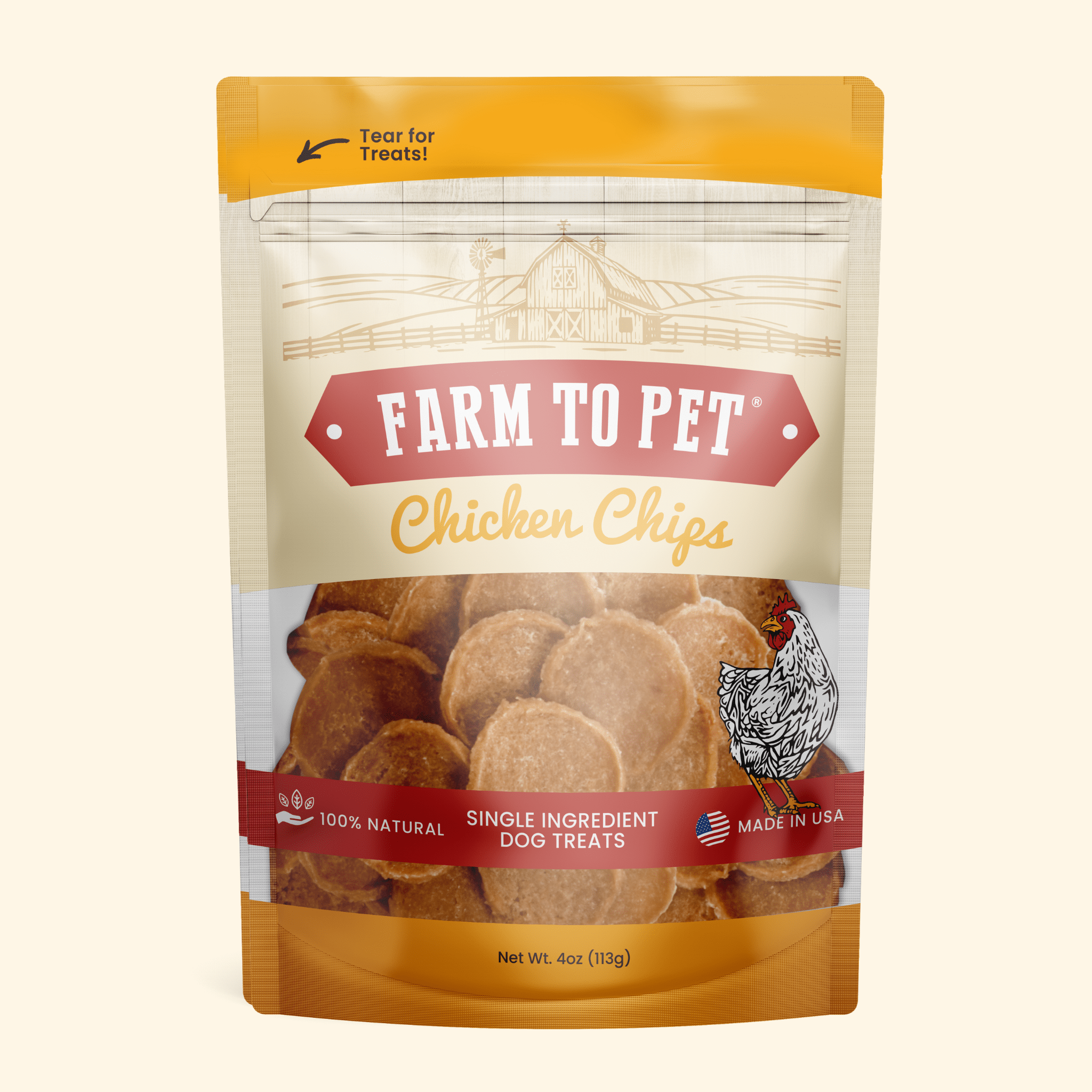
So, I got the KitchenAid, went in the basement, got some chicken breast, started grinding, dehydrating, and ultimately came up with our product that we have today.
I was working at Berkshire Hathaway at the time, so we were kind of between Duracell, which is one of our subsidiaries, and the Marmon Group, and just looking to do something for myself, a little bit different.
I loved my job, but I was trying to look for something different. Luckily, we got a little bit of traction with my dog. And then, you know, a few more dogs, a couple local places here in Chicago that I dropped off some quasi-bags to.
And it worked out well, and we’ve kind of grown since then.
Host: That’s great. That’s great. So, you know, I have never made dog treats in my life. Well, I mean, I have made them, but, you know, here you go — here’s a little peanut butter treat, that type of vibe.
What starts to become the first steps after you’re like, “Hey, I think we’re actually on to something here. This is actually working”? What did you start to think about? What were some of those moments that you were seeing?
Jackson: Yeah, I mean, that’s a great question.
Initially, I didn’t have any background in the pet space. Really no interest in making treats for my dog, homemade ones. But, you know, again, a friend kind of turned me on to this.
And I’m a little bit competitive. So, I thought, you know, what would be the thing that dogs would like more than anything else?
And, you know, right now there still is. Even five, six years ago, the market’s flooded with fillers and still kind of the remnants of cheap product on the dog and pet side.
And so I wanted to do something different. I said, “What if we took the same stuff, or even better than what you guys get at a restaurant or grocery store, and we took it down to its purest form?”
We didn’t have a lot of fat in there, very high protein, and see what happens.
What’s interesting about it is you can take one pound of chicken breast and you shrink it down and it’s a third of a pound, a little bit less after that, but it really retains that protein density and a crunch and the nutrition that the dog enjoys and that taste.
And, quite frankly, they go crazy for it.
So once I started with the idea of making it simple, breaking it down into a format that’s easy to administer — it’s not messy, there’s no cans, it’s got a long shelf life, you know, a two-year shelf life — and kind of went from there.
So it was just trying from a spot of not adding more stuff or new stuff, not really being innovative, but just kind of pulling everything else away. All the preservatives that try to keep your product fresh longer.
And so that was really the start of it.
And then once you kind of come up with that formula and figure out that the dogs love it, then you kind of have this single-ingredient brand and there’s no need to change it.
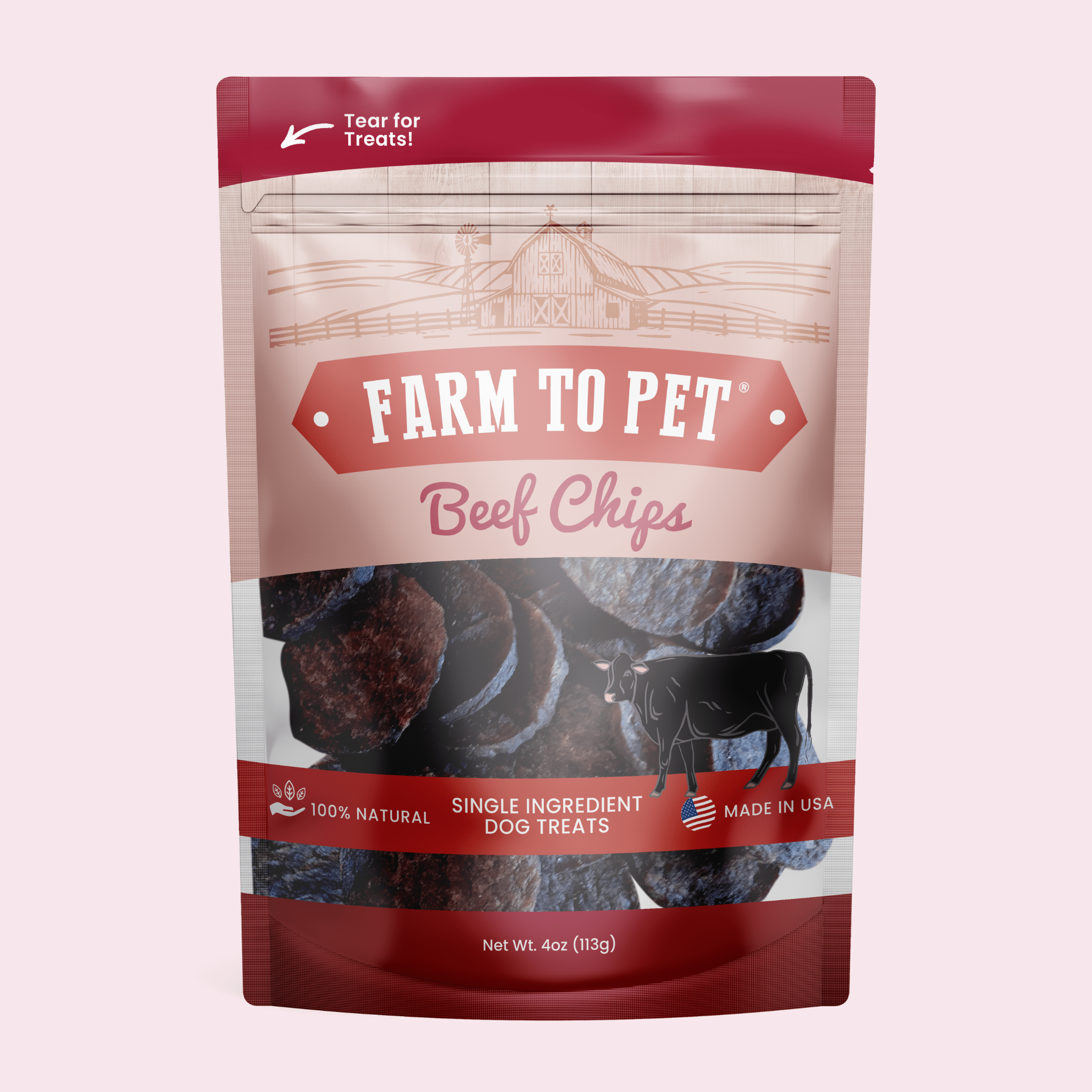
So that was the beautiful thing that, as we rolled into turkey and beef and we’re doing walleye, it’s all the same formula where it’s just a single ingredient. And it makes the purchasing and the recipe a lot easier.
Host: It’s kind of personal to us. We lost our dog last April. He was a pit bull and he had stomach issues, so we were just always very careful with food and stuff.
The thing that we actually — I think the last three years of his life, he ended up being 12 years old, so he was older — we were just boiling chicken, plain chicken, shredding it all up. And that and a little bit of rice was what he basically ate.
And so once we got even the best food that we were buying, the most boutique brands that they told us for a stomach…
The reason I bring this up is, were you thinking at all about dogs with sensitive stomachs and just all that world? Or was it just purely, “I’m just going to make one good product here and start there”?
Jackson: I think kind of two parallel paths.
Making the one simple product, and then also doing some research in parallel to say, “Hey, what’s really important to a dog?”
And you kind of hit it there. Most dogs — and vets don’t recommend changing a dog’s diet all the time. They’re not like us humans who are saying, “Well, we had pizza last Thursday, so we can’t have it on Friday,” right?
The consistency is really important with dogs.
And I think the treat space is fun because it gives you a chance to try something different for your dog versus changing their meal plan out.
So you can grab one of these little chips. You can grab one of these pieces. “Hey, do they like the turkey?”
Yep. And see also test the allergies.
A lot of dogs have sensitivities. You start to see it and the way they react.
Chicken actually is something that a lot of dogs are sensitive to. So you can give them a turkey, you can give them beef, you can give them something different, but you can give them a small amount without changing their diet.
And you can see the response right away.
And it really kind of rules out, if it’s just a single ingredient, you’re going to understand the relationship between that product and your dog and how they react versus something that has 12 ingredients, right?
That’s the hard thing with some of the other treats in the space. Maybe one of the 11th out of the 12th ingredients is causing some reaction, or the dog doesn’t like it.
And so you start from this base point. But if they like it and it’s healthy for them, then luckily for us, a lot of people have just stuck with that formula.
Host: Yeah, that’s great.
Let’s go back to your background just a little bit and what you’ve done in the past. How did that impact manufacturing, sourcing material, just all that sort of stuff?
How did some of your past work influence what you are doing now? And was it big, huge steps to get into it, or were you like, “No, I’ve done some version of this. I’m just pivoting over to pet treats”?
Jackson: Yeah, I think it helped in some areas and it exposed some weaknesses that you have.
So, working for a company that was started by Warren Buffett, there’s a lot of cash to go invest in a factory and innovation and different things throughout his literally hundreds of subsidiaries.
You have this professional network around you. You have the financial resources to go do things. It’s a lot about, “How can you manage that? How can you sell it to leadership?” on projects and really make sure that your superiors are happy with your work.
And then now, in this current world that I’m in, the customer is really kind of twofold.
It’s the customer that has the money. We don’t have dogs with credit cards yet. Coming, who knows? But the way the world’s going…
I think we have to appeal obviously to the dog. It has to be something healthy for the dog, that fits into their lifestyle, as well as the owner — that they can purchase easily, they can find, that they feel good about the brand, sourcing, all those things.
And so your audience has changed significantly.
When you’re building a factory or changing something in a facility, in my previous life, the audience is much different. And now it’s much more clear and it’s very reactive, right?
You can actually see those responses more in real time when you test something.
And another big piece is one of the reasons why we’ll get into crowdfunding, why we’re doing the crowdfunding.
I think we’ve got a market fit that we feel good about, and now it’s how you scale it.
And this has been fully bootstrapped and self-funded to date.
All the equipment that we have in our facility — dehydrators and grinders and slicers and packaging equipment, and you name it — all the inventory has been purchased.
And so it’s got to have a return that makes sense for the growth trajectory that we have.
You can’t go too fast because you’re limited by the money you have, inventory you can buy and equipment you can buy, right? And the financing you can get in those cases.
And so that’s a completely new thing to me.
That was really kind of learning that stuff — what it wasn’t a three-year return on a project there, right? It was trying to figure out how do you get your next purchase of turkey in and pay everyone your next payroll to be able to make the product to go ship out your orders in a couple weeks.
So that cycle is completely different.
But I would say overall, just having comfort seeing how a big facility is operated — from the manufacturing and distribution side, what type of leadership you need and what type of expertise from the equipment all the way through your supply chain — having that experience certainly did help coming into it.
And then learning on the fly, how do you figure out the financing side of it and then also the sales side.
Host: So, really, in that basically five-year window, it sounds like you went from the basement to a 13,000-square-foot facility in Chicago, right?
It’s a relatively short amount of time. Obviously a lot of work went into that.
Where does distribution start fitting in? Where do you start to see patterns of, “I actually need a big, huge facility,” as opposed to maybe a small ghost kitchen somewhere?
Where did you start to see milestones being hit that you said, “Yeah, we need to ramp up. We need to get to here. We need to get to here”?
What did that journey look like in that window of time?
Jackson: That’s a great question.
We really have a very seasonal spike for us, and it starts earlier than a lot of businesses because we go very heavy on Halloween.
It’s really kind of our precursor to the holiday season, Black Friday, etc.
Let me grab a box. Hopefully, I have one right here.
Here’s our Halloween shippers — these boxes that we’ll take and, you know, within there we do 31 treats.
And we’ll have these available. People can set them on their porch, they can give them out to their friends.
The first year we did that — we’ve done it a couple years now — that really helps us to get our name out, and we saw a huge increase in our sales.
Additionally, the wholesale side starts buying very early for Black Friday.
And so I knew there was a spike in demand that comes in the second half of the year, based on this and based on just the general season.
Last year — well, I’ll back up.
We started out in one facility, rented it, and it was a very small facility. Just really kind of month-to-month right next to someone I knew.
We were processing in there, outgrew that very fast.
And that was kind of my decision point of, “Hey, do I need to quit my job because I can’t do this both?”
So I need to kind of move on from my job and go full in, or shut it down because we have more demand and I can’t make it.
So I bought a facility in Chicago and thought that would last for a couple years.
Very quickly, we had to get another facility.
Earlier this year, 2026, we had two facilities here — the manufacturing and distribution — and then this year we consolidated into one.
So a lot of efficiency to bring there. It’s really hard to kind of go between.
To answer your question, that trajectory of how we went, we’ve been production constrained since the holiday of last year, even before holiday.
So, around September, we could only make a certain amount. We had seven days of production, six night shifts.
We maxed out all the electrical power in our building and we maxed out the physical space.
So it was building up as much inventory as we could during the summer last year to be able to go kind of live off fumes through the holiday.
And then once January hit, we were actually able to maintain our sales velocity, luckily. But it was really constrained because I couldn’t push more.
I wasn’t aggressive about marketing or going to get new stores until we knew that we had a space, the equipment, and the electrical, all those other things to be able to support much larger volume.
And so, thank goodness, I’m in here in that facility today.
We’ve been here about three months, operating one piece at a time, moving things over. But it’s night and day for us in terms of being able to have the bandwidth to be able to produce more.
So we’re happy on that journey.
It’s really been kind of looking at what the patterns are, trying to get ahead as best we can, and finance it however we can to be able to grow into that next spot.
So we’ve already been at four locations — five if you count the basement — so far in our history.
Host: One of the things when I think about a product like this, and I think it’s awesome that you’re a single-use product — chicken, turkey, walleye, I think you said a second ago — how do you avoid a bad year in chicken?
Something’s happening with it. It’s not meeting the standard that maybe you’ve set.
How do you navigate that potential risk that’s in there? And where do you see maybe, “Well, maybe we do have to add a little thing just to change…”?
Jackson: Yeah, I mean, that’s a simple but also concentrated risk.
That’s very aware of that.
There was a tough period with chicken last year. Chicken’s price is good now, but there were issues last year with bird flu. They impacted both chicken and turkey, and so the prices were high and also the deliveries.
We’re kind of hand-to-mouth here. Everything that we make, we’re taking our product, we’re making it, dehydrating it, packaging and shipping it out within about a week.
There’s not a whole lot that’s sitting here on the floor. It’s moving.
We keep very little actual inventory on hand. Again, that’s partly due to constraints.
But when that hurt — when the chicken prices went up, because that’s our number one seller — turkey prices went up and kind of remained up.
Beef, you probably know if you’ve bought hamburger or steak, is really tough, and it’s very popular with our dogs, right?
That makes it difficult on the beef side.
We’ve been able to eat into our margin quite a bit just to keep that going and keep being able to offer that, and then hopefully that market will stabilize or turn around in the future.
And then fish has been a nice partnership with our fishery there that we’re able to keep prices pretty consistent, but it’s all wild-caught in Lake Erie.
So we have to just kind of balance that whole portfolio and have to be prepared.
We’ve chosen not to pass that along to our customers.
And luckily, on the chicken side, the market’s kind of rebounded.
We just want it to be something that our customers can afford and they can get on a subscription and not have to worry that the price is going to change and it’s going to go back and down.
We know this is a very important part of a lot of the dogs that are currently purchasing from us, especially on the subscription side.
We try to keep it consistent and kind of manage the best we can with those price fluctuations.
Host: So, one of the things I also thought was really interesting, kind of going through your world here getting ready for this, was the fact that as of right now, you’re in a bunch of retail stores. 600 and something. I don’t have it in front of me.
Jackson: Actually, 1,000. I looked today. So, we had 1,003 retail stores.
Host: That’s crazy. I have put products into retail stores and just that alone, right? Then you have the Amazon side and then you have the subscription direct-to-consumer side of this equation.
How did you want to make sure that you were doing all three? Did you want to focus on one in the beginning?
Walk us through that because I think it’s amazing you’re doing all three at this point. All three of them are a little bit of a different business model behind the scenes.
Jackson: We started out with just local retail, and so that was the first place we got a taste.
That was just literally going into a store and saying, “Hey, would you please try this, sell it? We’ll buy back anything if it doesn’t move. We’re going to take it back.”
We came up with these little snack packs we call them.
Those are great because they can drive sample at a retail level. We give them away to a lot of retailers to kind of get started and get their customers accustomed to our product.
Initially, my thought was, “I don’t know much about the space. So if I don’t know much about it, I’m going to try to experiment with different things.”
We got onto Amazon and had some success there fairly early on, and had some success in a very small, concentrated few stores on the retail side.
And then I thought that building out our e-commerce presence was really important to kind of have that hero branding experience to the world and then build up subscriptions over time.
So that was the thought initially — to try out some different things.
The way it grew was we got a little bit better on our e-commerce and kind of learned on the fly.
I have some great people on the team. They were learning too. They didn’t have the experience, but we just tried a lot of different stuff on the e-commerce side.
Amazon has just been steadily growing, and that’s been, you know, we spend time on it, but it’s not the same care and feeding that you have to do with the other two channels.
And our direct channel, led by some things we do on Instagram and whatnot, is actually fueling a lot of our retail customers.
So we didn’t actually reach out to many of them. They came in and found us and said, “Hey, we’d like to try something out.”
We did that.
We really haven’t had a wholesale presence in terms of like the buildout team or anything. It’s just been a lot of independent retailers coming on.
We don’t use distributors.
That’s a decision I made initially. I said, “Hey, number one, we can’t grow that fast even if we had it. So let’s just keep that direct relationship with our retailers.”
And so that was something that I’m glad that we did early on, to kind of keep that relationship.
It’s just been a slow and steady reach out.
We are reaching out to a lot more now. We do have someone on the team that is contacting our potential independent retailers, and we get good traction in that space.
And so we’ve been a little bit different than some of the other brands that will start with some of the distributors or larger chains.
We’ve kind of been building up from our direct-to-consumer side and our independent retailer side.
And I think that’s put us in a good position for not only future opportunities, but to even get better in those spaces.
There’s a yes, we have to ship to every single one individually, every single store. There’s maybe this store has three and this had two locations.
So there’s some challenges there in terms of just the scalability of that.
It’s almost like direct-to-consumer. You’ve got to treat it almost similarly.
But at the same way, we get the attention that we need in the store.
I think that’s so important, that most of our retailers know about our product, the benefits, they can talk about it.
They can ask us and say, “Hey, we’re having an event in two months. Can you send us some extra samples?”
So that’s how we work with them and we grow together.
It’s been really fun having those types of relationships versus kind of being a step or two removed from the customer and the pulse of what’s going on.
And because of that, I think that’s what’s led us to get to a thousand stores without an aggressive outreach program and kind of helped us with that slow and steady growth.
Host: I want to move over to let’s talk a little bit about money here.
Obviously, I connected with you. I saw about a month ago when you launched your StartEngine campaign, give or take somewhere around there.
I’ve noticed that you’re trending in the right direction on there.
So I guess what’s interesting for me is maybe the decision to go to crowdfunding.
You’re five years in, self-funded at this point. You’re profitable, so why not take either a strategic check from somebody or just go some other routes?
How do you get to the StartEngine Reg CF? How do you get to that thought pattern of, “This is the right step for us to raise some capital”?
Jackson: I think it leads back to what we talked about earlier.
We were production constrained and I knew two buildings, no ability to make more, and I knew we had to take a pretty significant leap to get to the next place that we needed to be.
We also had our dehydrator technology. I wanted to upgrade that.
There were some other things that we wanted to do in terms of automation.
We take meat, we grind it, and we want to make sure that we have the best equipment we can have for our workers and for everything that we need to do to keep them clean and operating in an efficient way.
There were quite a few steps, and I had no idea how we were going to do it as we backed up to September, October.
The holiday was going great, but behind the scenes, my wife can probably attest, I was stressing.
I was stressing because I said, “Hey, this is great, but what’s next?”
And it takes a long time to go pick up and move facilities.
So at that time, I started reaching out to colleagues that knew people in the space — people that really know about startups, crowdfunding, venture, all these different avenues, angels — and just getting different opinions on what could make sense.
To be honest, I didn’t want to raise any money.
I like being your own boss and kind of having this team and stuff.
And so that was very important to kind of maintain control at this stage, because I think we’d have a really good next couple years if we could get to the next facility.
So anyways, the crowdfunding idea came about after a lot of research and figuring out, “Hey, what is a way that we can get started?”
And we said, “Hey, let’s give that a shot.”
It took a lot longer than what I could ever imagine to get the financials reviewed and the Reg CF, as you said, and all that stuff going.
It took really since October all the way till just recently doing all this work.
Maybe I would have made a different decision, but anyways, to get in a position to go have this…
Again, you’ve been through lots of these, so you know all the tricks of it, and we really don’t.
We’ve been learning on the fly as we kind of went through.
And the whole idea was, I didn’t know where the money was going to come for the next round.
We were not profitable in 2025. So far this year we have turned profitable, which is great.
But bankers aren’t going to look at your last two years of tax returns and hand out the money that we needed.
And we’ve been self-funding this.
You want to know where you’re going to have that help come in for the profitability, but you also have to spend the money to get the money, right?
So anyways, we started looking for a new building and we were starting on the crowdfunding thing at the same time.
Ironically, we found the new building much faster and bought the equipment and kind of got up here and rolling before we even got our crowdfunding launched.
So we said, “Hey, does it still make sense?”
I think it does because we’ve got a lot of growth ahead of us, right?
And it brings some opportunities to us from having our customer base be involved and people that kind of want to help support a business like us on the crowdfunding side versus needing a more professional investor base this time.
I just didn’t feel that we needed that because we kind of know what we’re doing for at least the next few years.
And that’s ultimately how we went down the road of doing the crowdfunding.
And we kind of got started on this and now we’re trying to figure out what was the best way to connect with the right people.
And hence, we’re talking today.
Host: When you think of use of funds right now, and it sounds like probably originally it shifted, right?
It sounds like in the beginning it was for the building and all sorts of stuff.
As you think about use of funds now, what do you guys have as major milestones?
Is it 2,000 stores? Is it more Amazon? Whatever it is.
What do you see as the next sort of three or four milestones that you want to hit that really push you guys into a global pet brand?
Where do you see those milestones sitting right now?
Jackson: I think the biggest one is an internal metric, which is maintaining profitability for us.
I think that’s really kind of trumps many of the other vanity metrics for what we’re trying to do.
Yeah, it’s great you’re in a thousand stores, but are you able to continue to pay your employees and continue to grow your team and that type of stuff?
And spend on marketing, you know, forward-looking stuff that we need to do.
In my head, it’s really kind of simple.
It’s just making sure that we have enough to be able to continue the trajectory that we have right now and further invest in it.
Further take the strength of our team.
My team is really from the manufacturing side to the people that we have in marketing, and the rest of the team has been with me really since the beginning.
So we’re all getting smarter and a little bit better as we kind of go through the seasons and learn these things.
I think it’s just continue to invest in that aspect of our growth, which is exciting to me, without knowing that there’s a cliff in the future.
There was always a cliff. We couldn’t make anymore, right?
So now you don’t have that.
It’s a little bit kind of like, “All right, now we can actually roll up our sleeves.”
Once this crowdfunding is done and the stress of that, we can kind of roll up our sleeves and just do the right things that we want to do.
The little improvements, the extra nudges with our wholesalers and giving more to help them grow, being a little bit more aggressive on Amazon so we can actually grow at those rates, and put a little bit more in the marketing and whatnot.
So I think it’s a little bit of everything there.
It’s a little bit of reach-outs and it’s a little bit of bringing that cost down to produce because they were very costly in the different processes.
So I think bringing the cost down, keeping the team intact in terms of your kind of overhead structure, and then those margins as you grow will start to flow through and help with profitability.
That’s kind of in my head what the next steps are.
And then when you’re at that stage, you’ve got a lot of the world’s bigger in terms of options versus saying, “Hey, we’re unprofitable and we need more X or Y,” and you’re having to go to avenues that are not that beneficial from a finance perspective or strategic perspective or whatever it might be.
We want to keep the best options on the table.
And I think by doing that — and this is what the crowdfunding helps us to do — is to continue to build the enterprise value by investing in the lower cost, continue to see the customers rise and making sure our team has all the right people and the tools.
I think we do, but continue to make sure that they’re happy and that we continue to have fun.
Host: So, I’ve got two more questions and I’m going to let you go and get back at it because you’re wearing multiple hats here. You’re doing a lot of stuff.
You kind of answered this, but I want to think about it a little bit differently.
When you go after retail investors, we’re going after a common person here, and probably pet lovers as well.
My wife would 100% be all about this. She’s all about clean eating for ourselves and our pets.
When you start getting into retail investors, most of them probably have not invested in either consumer goods or pet products.
What would be one metric that you would just tell them, “Hey, follow this about us”?
Not getting into the weeds of the actual raise or the deal, but just follow this metric in us because this is sort of a north star in just pet industry, consumer goods.
If we’re doing this, we’re on the right track.
Is there a metric that you can just think of like that that that average investor would look at and go, “Hey, that’s great”?
Jackson: If I had to take one in my head…
I’m switching, and I’ll tell you why.
It’s really the lifetime value of our customer.
So on our website, when someone purchases from us, we know on average for every one single purchase, this is how much this person purchases over the lifetime.
And we’re fairly young, so maybe some people have been purchasing two years ago, their first purchase.
But that, for us, that number is $130 and it’s growing.
And that’s driven by subscriptions.
And when people have subscriptions, there’s a level of trust.
It wasn’t a marketing tactic to go click on a Facebook ad and they buy one time and then they leave, or some Facebook trend — excuse me, TikTok trend — or something like that.
So for us, the north star is continuing to have customers that repeat-buy.
And we don’t have to go out and blanket the earth with a lot of expensive ads and other tactics to go find more customers.
Keeping our customers happy, keeping the prices where they need to be so they can afford them, making sure we have excellent customer service, making sure we’re coming out with new products, new lines to keep them interested.
So, if you look at the growth of that over our company on that trajectory, I think it’s representative of how we’ve grown in a way that’s not this massive spike and say, “Hey, we went up 300% last year.”
We haven’t.
So we’ve had a more steady growth, and I think this new facility, obviously the new funds certainly help with that.
And then some of these new marketing, some of these new sales channels that we’re going to get into, and the acceleration of our wholesale business.
I think all those things kind of lead into creating a more sustainable business that we’re able to get the right customers, keep them happy, and not have to grow or make drastic changes to what we’re doing.
And there’ll be a point in time where that starts to level out.
But, for right now, at least from our early history, I think we’ve got a lot more green field ahead of us in terms of doing the right thing there and hopefully continuing to bring value to the customers.
Host: Yeah, it’s an excellent answer.
As somebody who’s worked in a lot of these companies, that lifetime value, low churn rate, that’s one of the metrics that I always look at, too.
Even when I’m running a lot of ads for companies, I’m like, yeah, we can get one sale. That’s great.
And by the way, it was really expensive because we had to make creative, run the ads, might have an agency.
If you can get that person buying four or five times, that’s where it’s at.
Host: So where can people dive in if they want to learn more? Maybe they want to actually buy some product. Where should we send traffic?
Jackson: You can just Google Farm to Pet.
Our website is at farmtopettreats.com.
If you’re on all the socials, we’re Farm to Pet on Instagram, Facebook. Check us out on TikTok, YouTube, all the different places.
Check it out at your podcast, Jeff.
You know, I think that’s one place, but we’re fairly easy to find.
We’re on Amazon, and then you can check out our campaign at StartEngine, too.
So, it’s great once I address it from the investment side.
Hopefully, we’ve explained to get a general understanding of what the business is.
We’ll be doing some webinars. We’ll also have some other activities in the near future that we can hopefully answer questions.
I’m open. If there’s any questions that people do have about our raise, about our business, where the direction’s headed, we love to have those conversations.
Host: That’s great.
Well, for all my listeners out there, you guys have been with me before. I’ll have all the links in the show notes here over on YouTube and websites, etc., all the different places.
And I’ll have actually all the chapters out there, too. So if you guys want to go into certain chapters, you guys can do that, too.
Jackson, I appreciate you taking time out of your day. I’ll let you get back at it. Let you make those treats, and good luck on the StartEngine campaign.
I’ll be watching from my end.
Really cool stuff and a great story. Thank you so much for your time.
Jackson: All right. Thanks so much, Jeff.
Six years ago, Farm to Pet started with a dog named Rooney, a KitchenAid in a Chicago basement, and a simple question: What if a dog treat didn’t need anything more than the ingredient itself?
Today, that same philosophy continues to guide how we make our treats, how we build relationships with retailers and customers, and how we think about the future of Farm to Pet.
As Jackson shared in the conversation, we’re still focused on the fundamentals: making great products, taking care of our customers, building a strong team, investing in our manufacturing capabilities, and growing in a way that is sustainable for the long term.
We’re grateful to Jeff and the Pre-IPO Hype team for inviting Jackson to share the Farm to Pet story — and for giving us the opportunity to talk about where we’ve been, where we’re headed, and why we’re still just getting started.


Spooky packaging, limited-time treats & fun accessories for pups who love a little howl-o-ween. Click below to explore the full collection.
Shop Halloween


