






A treat isn’t candy. Plenty of dog treats are built like it, though. Here’s how we read a treat label in our Chicago kitchen: which ingredients send a bag straight back to the shelf, and what a good one looks like instead.
Short answer: Walk away from dog treats that list BHA, BHT or ethoxyquin, propylene glycol, artificial colors, added sugar or corn syrup, or an unnamed protein like “meat meal” or “animal fat.” Look for a short ingredient list that starts with a named meat, a guaranteed analysis printed on the bag, and a maker who tells you where the treat was made. The best label we know of reads: Ingredients: chicken breast.

Dog treat ingredients to avoid
The front of the bag is marketing. The back of the bag is regulated. So skip the leaves-and-sunshine artwork and turn it over. Under AAFCO labeling rules, ingredients are listed in descending order by weight, so the first three or four tell you most of the story. These are the ones we’d rather not see anywhere on it.
- BHA, BHT and ethoxyquin. Synthetic preservatives that keep fat from going rancid. They’re permitted in pet food. We preserve by removing water instead. Low moisture is what gives a dehydrated chip a two-year shelf life with nothing added.
- Propylene glycol. A humectant that keeps chewy treats chewy. The FDA prohibits it in cat food and still allows it in dog treats. That gap alone is enough for us to leave it out.
- Artificial colors. Red 40, Yellow 5, Blue 2 and their cousins. Dogs don’t care whether a treat looks like bacon. Dyes are there to sell to you, not to feed your dog.
- Added sugar. Sugar, corn syrup, molasses and dextrose show up constantly in soft treats and bacon-style strips. Sugar is a cheap way to make a treat taste like something, and it adds calories with nothing behind them.
- Unnamed proteins. “Meat,” “meat meal,” “poultry by-product meal” and “animal fat” are legal AAFCO ingredient terms. They tell you the kind of tissue, not the animal. A named ingredient reads “chicken” or “beef.” An unnamed one can be any species that fits the definition.
- Salt and flour near the top. If salt is the second or third ingredient, the treat is seasoned for a person’s palate. If wheat flour or corn leads the list, you’re paying meat prices for a biscuit.
One more category sits above “avoid.” Xylitol (sometimes listed as birch sugar), grapes, raisins and onion are toxic to dogs. If you spot one in a treat, or your dog gets into one, call ASPCA Animal Poison Control. We keep a longer list in what to watch for when shopping for healthy dog treats.

What to look for in dog treats
Now the good news. A genuinely good treat is easy to spot once you know the tells. Every item below is something you can check on the bag or the maker’s website in under a minute.
- A named, single protein. The label should say chicken breast, turkey breast, beef or walleye. Not “poultry.” Not “meat.”
- A list you can read out loud. One to five ingredients, all of them words you recognize. If it reads like a chemistry glossary, put it back.
- A guaranteed analysis. Crude protein, fat, fiber and moisture, printed on the bag. AAFCO labeling rules call for it, and it lets you compare bag to bag.
- The maker’s name and where it was made. “Distributed by” is not the same as “made by.” A maker who runs their own facility will tell you so.
- Nothing artificial. No colors, flavors or preservatives. “Natural” has an AAFCO definition: from plant, animal or mined sources, not chemically synthesized. Words like “holistic” and “gourmet” have no definition at all.

One last check that costs nothing: read the reviews and the maker’s social feed. Repeat buyers will tell you fast if a batch changed. Cats deserve the same scrutiny, and the same checklist applies to cat treats.
Look for this, walk away from that
Here’s the whole article as one table. Screenshot it for the pet aisle.
| Look for | Walk away from |
|---|---|
| A named protein first: chicken breast, turkey, beef, walleye | “Meat,” “poultry” or “animal” with no species named |
| One to five ingredients | Twenty-plus ingredients |
| Preserved by drying (dehydrated) or kept cold | BHA, BHT, ethoxyquin, TBHQ |
| The color the meat is on its own | Red 40, Yellow 5, Blue 2, caramel color |
| No sweetener of any kind | Sugar, corn syrup, molasses, dextrose |
| A crisp or firm texture from low moisture | A soft texture from propylene glycol or glycerin |
| A guaranteed analysis printed on the bag | No analysis, or one you have to hunt for online |
| The maker’s name, city and their own facility | A “distributed by” line and nothing else |
| Country of origin stated for the product and its ingredients | No country of origin anywhere on the bag |
| Feeding directions by dog size | “Feed freely” |
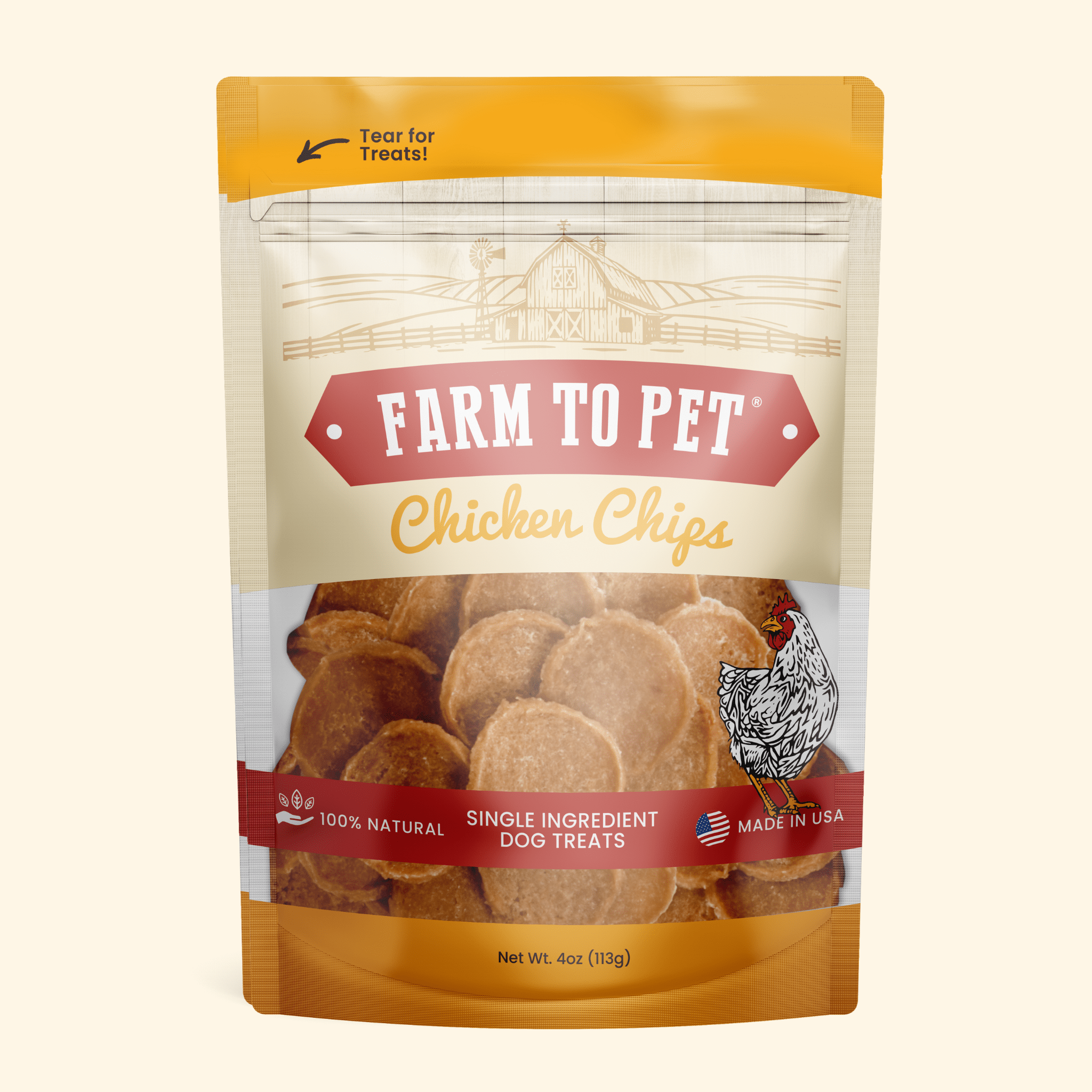
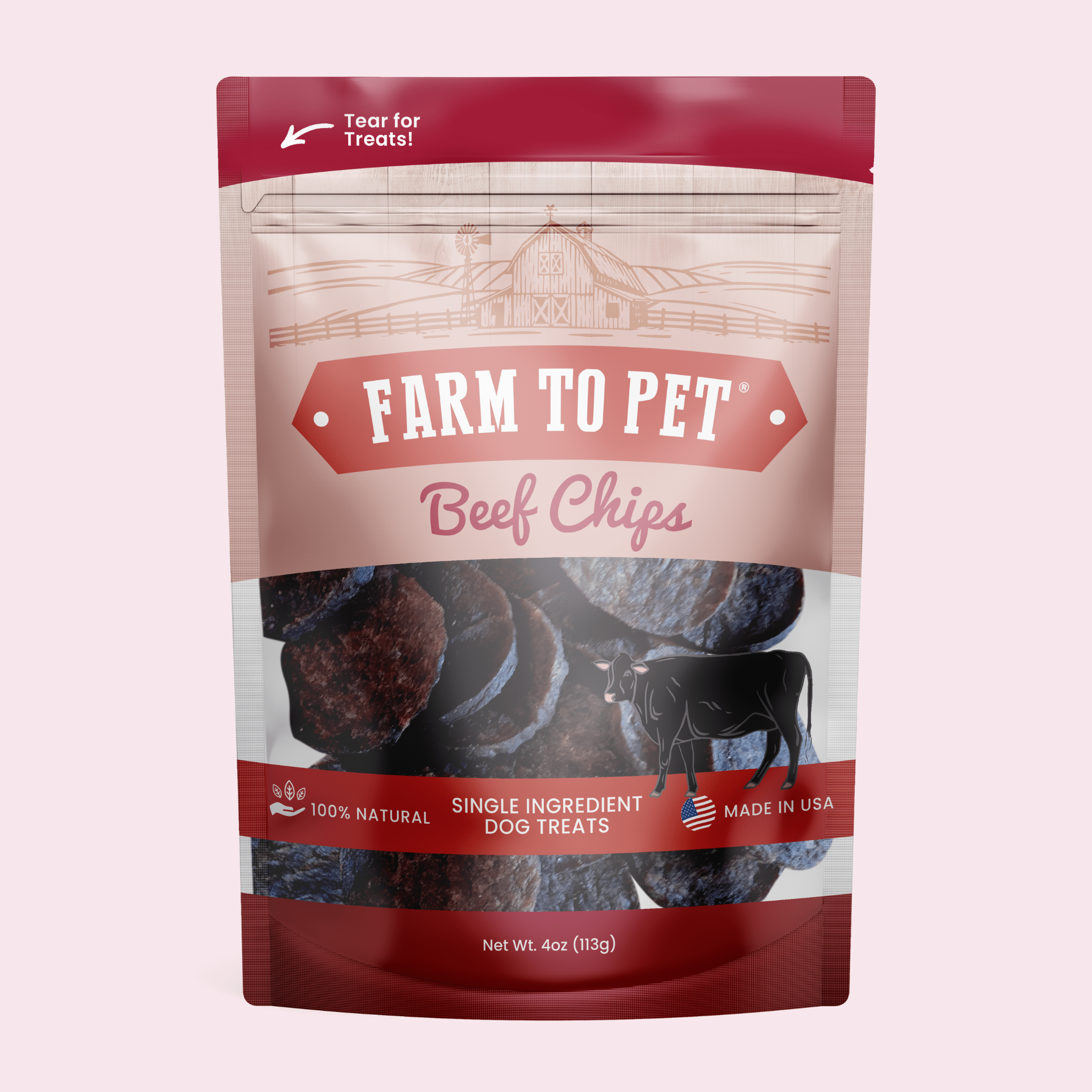
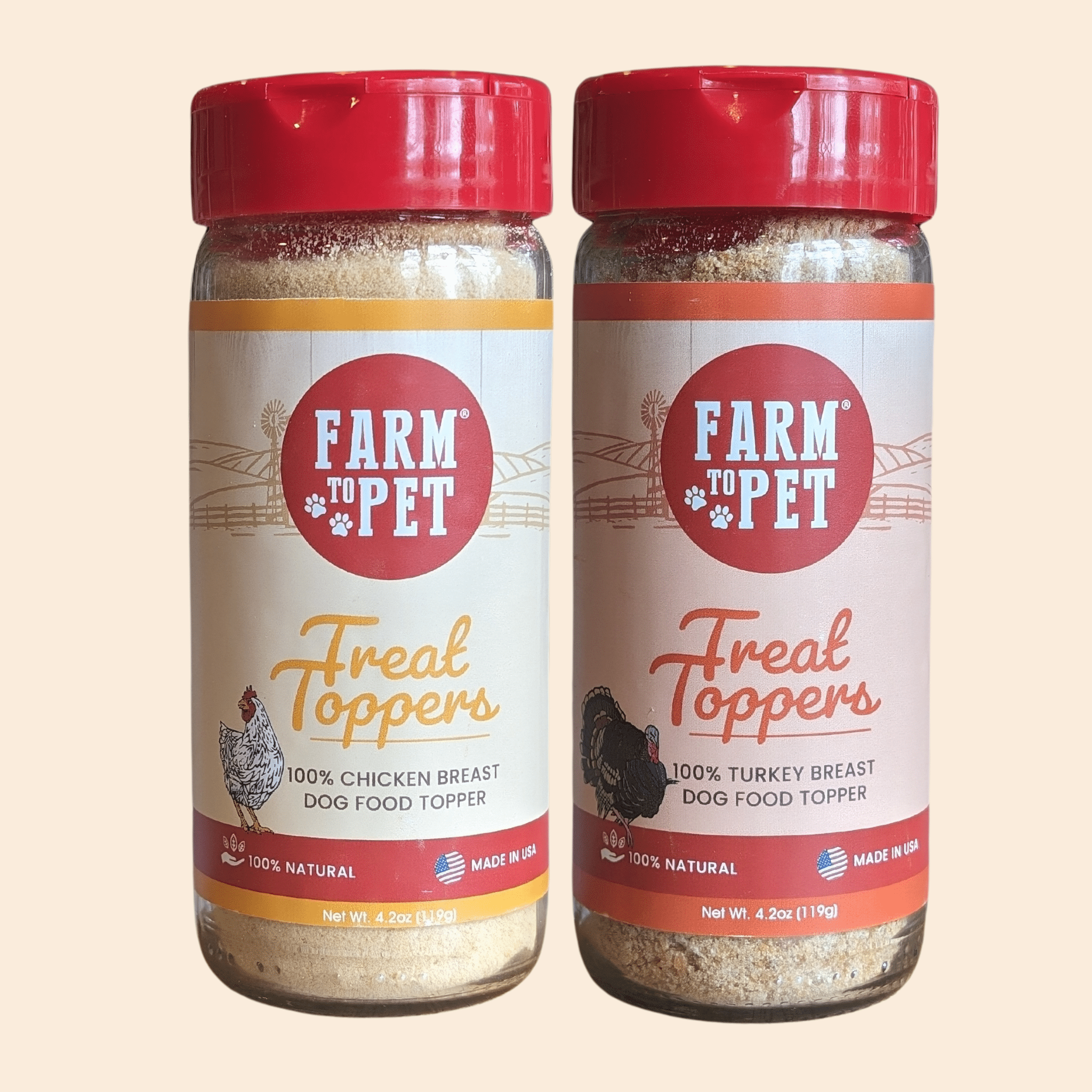
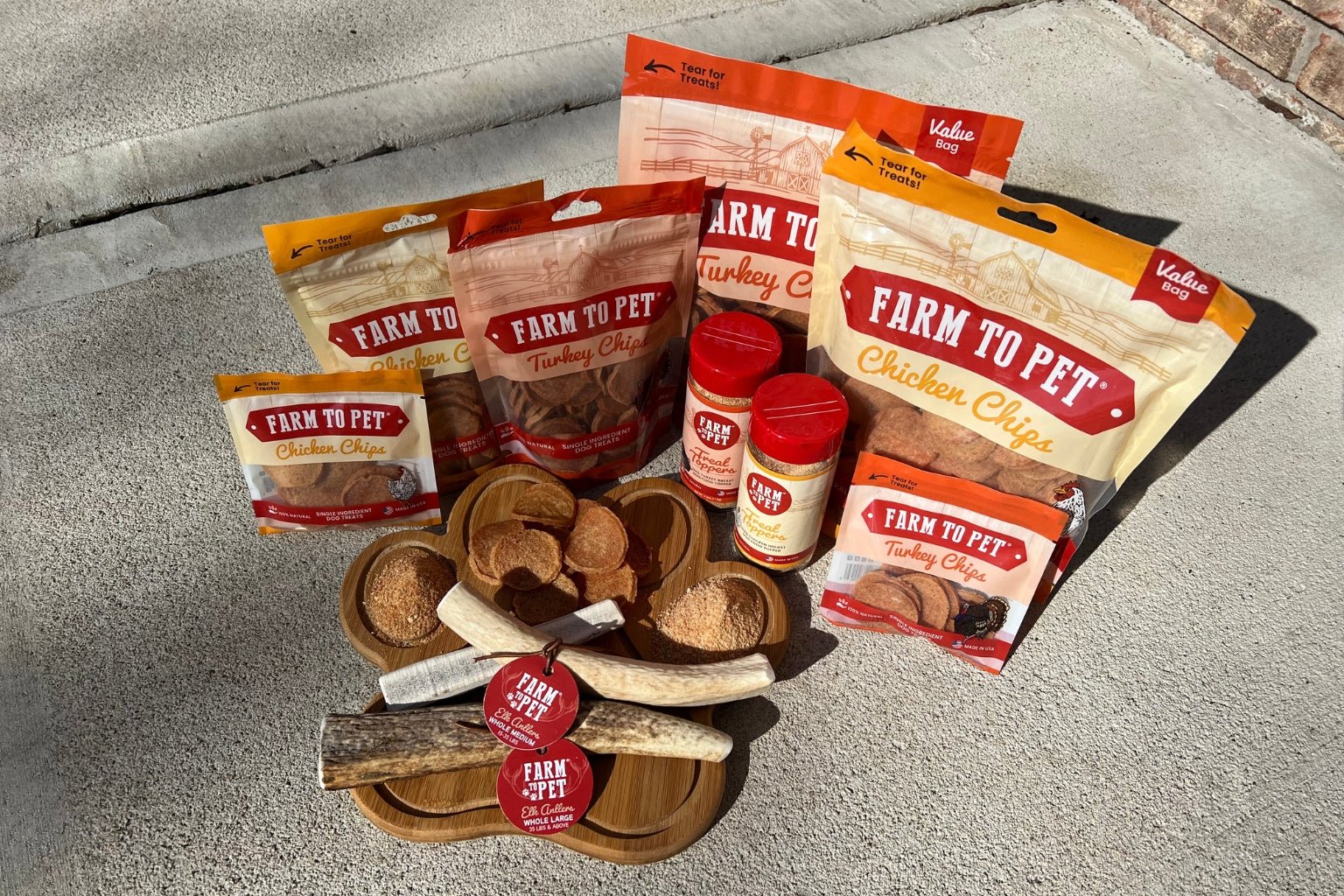
From our kitchen: Our Chicken, Turkey, Beef and Walleye Chips, plus Crumbles and Toppers, have one ingredient each, gently dehydrated in our own Chicago facility with nothing added. Shop dog treats.
How to read a dog treat label in one minute
Start with the product name, because AAFCO’s naming rules for pet food put real numbers behind it. A product simply called “Chicken” has to be mostly chicken. “Chicken Dinner” or “Chicken Recipe” needs far less. “With Chicken” needs less still, and “Chicken Flavor” only needs enough for a dog to detect it. The AAFCO reading labels guide and the AKC label guide both walk through these tiers.
Next, the ingredient list. Heaviest first. Watch for the same ingredient split into pieces so it drops down the list: “corn,” “corn gluten meal” and “ground corn” are three entries for one crop. Then the guaranteed analysis, then the fine print: who made it, where, and how to reach them.
Then try it in the aisle. Pick up a bacon-style strip and count the ingredients, and notice how far down the list the first named meat appears. Now read our Chicken Chips label: one ingredient, chicken breast. Same shelf, different products entirely.
We started the way most dog people do. In 2021 Jackson was dehydrating chicken breast in his basement for Rooney, his rescue dog, because he couldn’t find a treat with a label he trusted. The label hasn’t changed since. What has changed is the kitchen: a 13,000 square foot facility in Chicago, four proteins, and about 1,000 independent pet stores that carry the chips. The checklist above is the one we hold ourselves to, and it’s the one we’d hand you in the aisle.

Questions we get asked
What ingredients should I avoid in dog treats?
Avoid synthetic preservatives (BHA, BHT, ethoxyquin), propylene glycol, artificial colors, added sugars such as corn syrup, and unnamed proteins like “meat meal” or “animal fat.” Be cautious of salt or flour near the top of the list. Anything containing xylitol, grapes, raisins or onion is toxic to dogs and shouldn’t be in a treat at all.
Are single-ingredient dog treats better?
Single-ingredient means you know exactly what your dog is eating, which makes it much easier to rule things in or out for a dog with a sensitive stomach. It isn’t a magic phrase, though. Check what the one ingredient is, that it’s a named animal, and how the treat was preserved. We go deeper in our post on single-ingredient dog treats.
How many treats can I give my dog a day?
The rule of thumb veterinarians commonly give is that treats should make up no more than 10 percent of a dog’s daily calories, with meals covering the rest. For a small dog that’s only a few treats. Break larger treats into pieces for training, and trim meals on heavy-treat days. Your vet can give you a calorie target for your dog.
What does “made in the USA” actually tell you?
It tells you where the product was made. It doesn’t tell you where the ingredients came from, what’s in the treat, or whether the brand made it themselves or hired a co-packer. Treat it as a starting point, then look for the maker’s name, their facility, and a stated ingredient origin. Our chips are made in our own Chicago facility from responsibly sourced meat, and we’ll tell you so on the bag.


